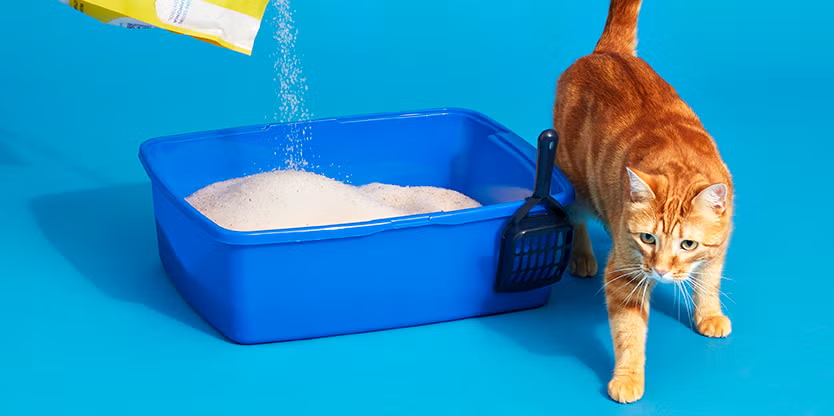
Choosing the right cat litter matters more than many new owners realize. A good choice keeps your home cleaner, cuts down on odor, and can even affect whether your cat happily uses the box. By 2026, litter options have only improved—stronger clumping, better odor control, lower dust, and more eco‑friendly choices are all easier to find. Here’s a quick guide to help you pick the best one for your situation.
1) Clumping clay litter — the safest default for most homes
Why it’s still the go‑to: globally, clumping clay holds a dominant share of the market, and clay raw material remains the largest segment. Research on the broader market shows clumping products had about three quarters of share in 2024, with clay as the base for roughly 80% of the market by raw material. Grand View Research This matches what many owners see on shelves and online—easy availability, solid performance, and predictable costs.
Best for: single or multi‑cat homes wanting quick scooping, strong odor control, and widely available options.
Tradeoffs: heavier bags than some alternatives, less eco‑friendly, and some formulas still produce dust even as brands improve.
Tip: look for brands advertising low dust or improved clumping; those tweaks often address the biggest complaints from owners.
2) Silica or crystal litter — best long‑lasting odor control
What sets it apart: silica gel or crystal litter has a unique structure that traps odors more effectively than many clay-based products. Recent practical testing and manufacturer‑led analysis reference silica’s ability to control smells for weeks, sometimes about 25–30 days with occasional stirring—far longer than typical clay litters. emilypets.com
Best for: apartments, small homes, owners who want minimal daily maintenance, or anyone very sensitive to odor.
Tradeoffs: usually pricier than clay; texture can feel different to some cats. A few cats may take time to accept it, though many adapt quickly.
3) Eco‑friendly and biodegradable litter — rising in popularity
Why more owners choose it: as pet ownership grows, so does interest in sustainable products. The market forecast also links rising demand to shifts toward eco‑friendly, natural, and low‑dust options, especially among premium or specialized segments. Grand View Research Materials like wood pellets, corn, wheat, tofu, or recycled paper can reduce environmental impact, lower dust, and sometimes be lighter to carry.
Best for: environmentally conscious owners, households with allergies or respiratory concerns, or anyone wanting a lighter bag than clay.
Tradeoffs: some brands clump less strongly; performance varies widely by material and brand. Price may be higher than basic clay, though not always.
Tip: if switching from clay, introduce gradually—mix old and new litter over several days to let your cat adapt to texture or scent changes.
4) Low‑dust or dust‑free formulas — healthiest indoors
What to expect: modern low‑dust litters aim to minimize airborne particles, which is helpful for owners and cats with sensitivities. Besides potential health benefits, they often mean less tracking of fine particles around the home.
Best for: allergy‑prone owners or cats, and anyone who wants an overall cleaner feel around the litter box.
Tradeoffs: sometimes costs more than standard litter; availability depends on region and brand selection.
5) Multi‑cat households — special formulas worth it
If you have more than one cat, look for multi‑cat specific formulas. These usually combine stronger clumping, more aggressive odor control, and longer freshness. They can help keep boxes usable for longer periods between full changes, especially in busy households.
How to pick among these in 2026
- Assess your home: apartment vs. house, number of cats, storage space, budget.
- Prioritize odor and dust: if those annoy you most, silica or low‑dust options bring real gains.
- Try in small quantities first: cats can be particular; a short trial helps avoid waste. If a cat rejects a new type, mix gradually rather than swapping everything at once. Behavioral research also suggests cats can have strong substrate preferences—clay was strongly preferred in one study—so keep that in mind if you’re switching. IAABC FOUNDATION JOURNAL
- Weigh sustainability: if eco impact matters, test a few biodegradable options until you find one your cat tolerates well.
Final thought
There isn’t one perfect litter for everyone, but in 2026 the best choices are clearer: pick a low‑dust, odor‑controlling option your cat accepts and your home can handle. Start with clumping clay or silica, then adjust toward eco‑friendly types if that fits your values. With a little testing, your home can stay fresher and your cat happier—no matter which litter you end up choosing.